Friday, October 14, 2011

Switchgrass

Switchgrass, or Panicum virgatum, has become increasingly popular in the past ten or fifteen years as an ornamental grass that is native to North America, as opposed to the previously used Miscanthus and Pennisetum species.  It's a terrifically useful plant aesthetically, but it also has scientific merits as well.  The plant has been used for phytoremediation as well as biomass.  


Grasses are amazingly evolved plants -- where most angiosperms have the apical meristem (the part of the plant that signals growth and cell production to the entire organism) located at the terminal leader of the plant, grasses evolved so that the apical meristem is located at the joint where new blades emerge from the sheath.  This is an adaptation in response to the grazing habits of mammals on the plains.  If, for instance, buffalo grazed on grasses and consistently chewed off the apical meristem, the plants would diminish quickly.  When the apical meristem is at a node closer to the ground, growth patterns are not interrupted by nearby herbivores. (Please note: I probably condensed several books' worth of science into a few sentences -- no doubt a better scientist could have explained this more clearly and accurately!)


The photos above are most likely of a cultivar of switchgrass called 'Shenandoah' which is notable for it's red foliage.  The shots above also show the panicle of flowers typically seen in late summer/early fall.  Panicum is a warm season grass, which means the plant grows most during hot, dry summers and has extensive root systems to allow them to survive drought.
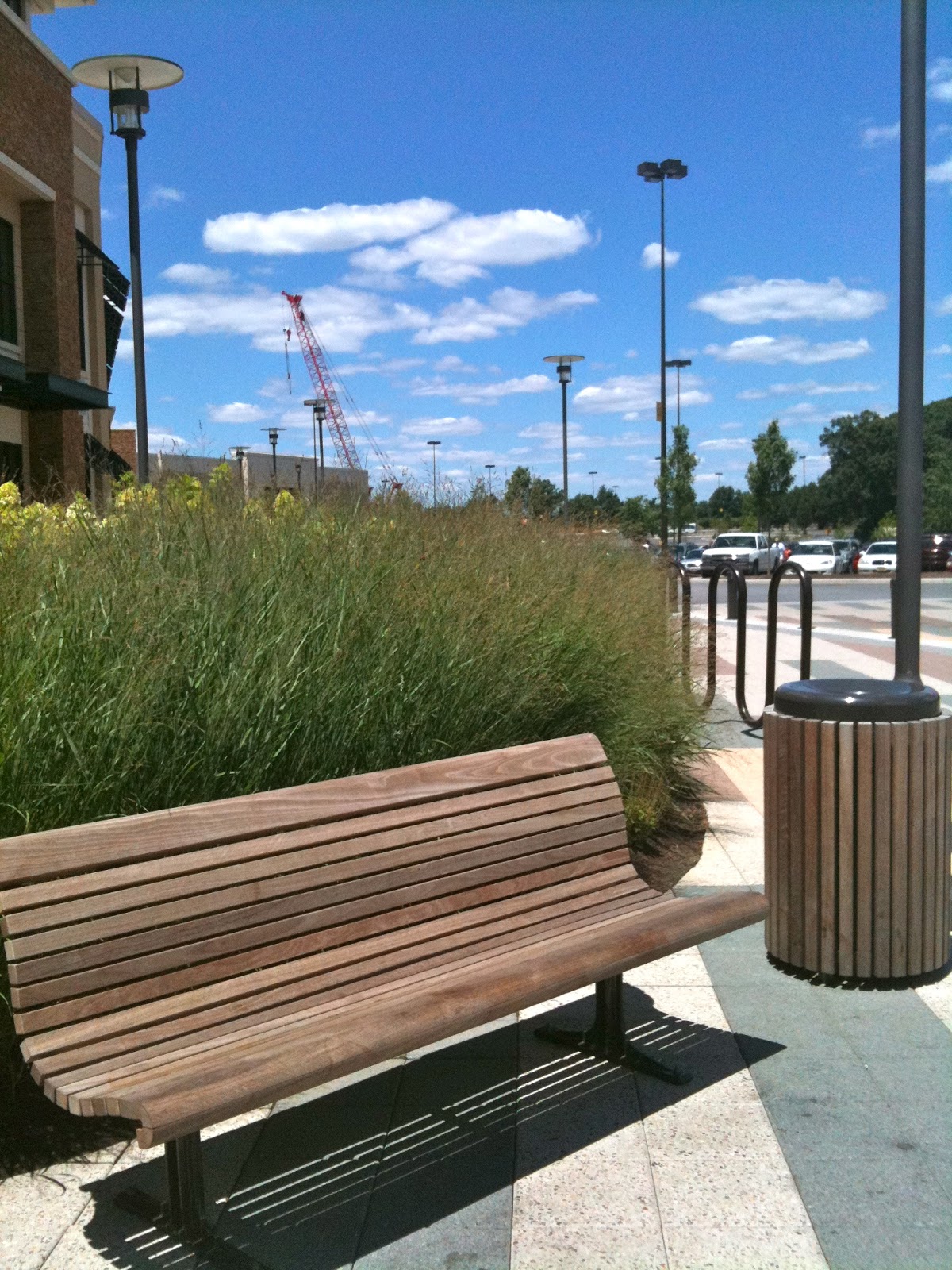

The shot above and below is at the Christiana Mall in Delaware.  I think it is a good illustration of how a native prairie grass (though its distribution stretches from Nova Scotia to Mexico) can be used in a very corporate landscape.  I also think it combines beautifully with Hydrangea paniculata.


Panicum is derivative of the Latin word for millet, which is also the root for the word bread in French and Spanish, pain and pan, respectively. 

Friday, October 7, 2011

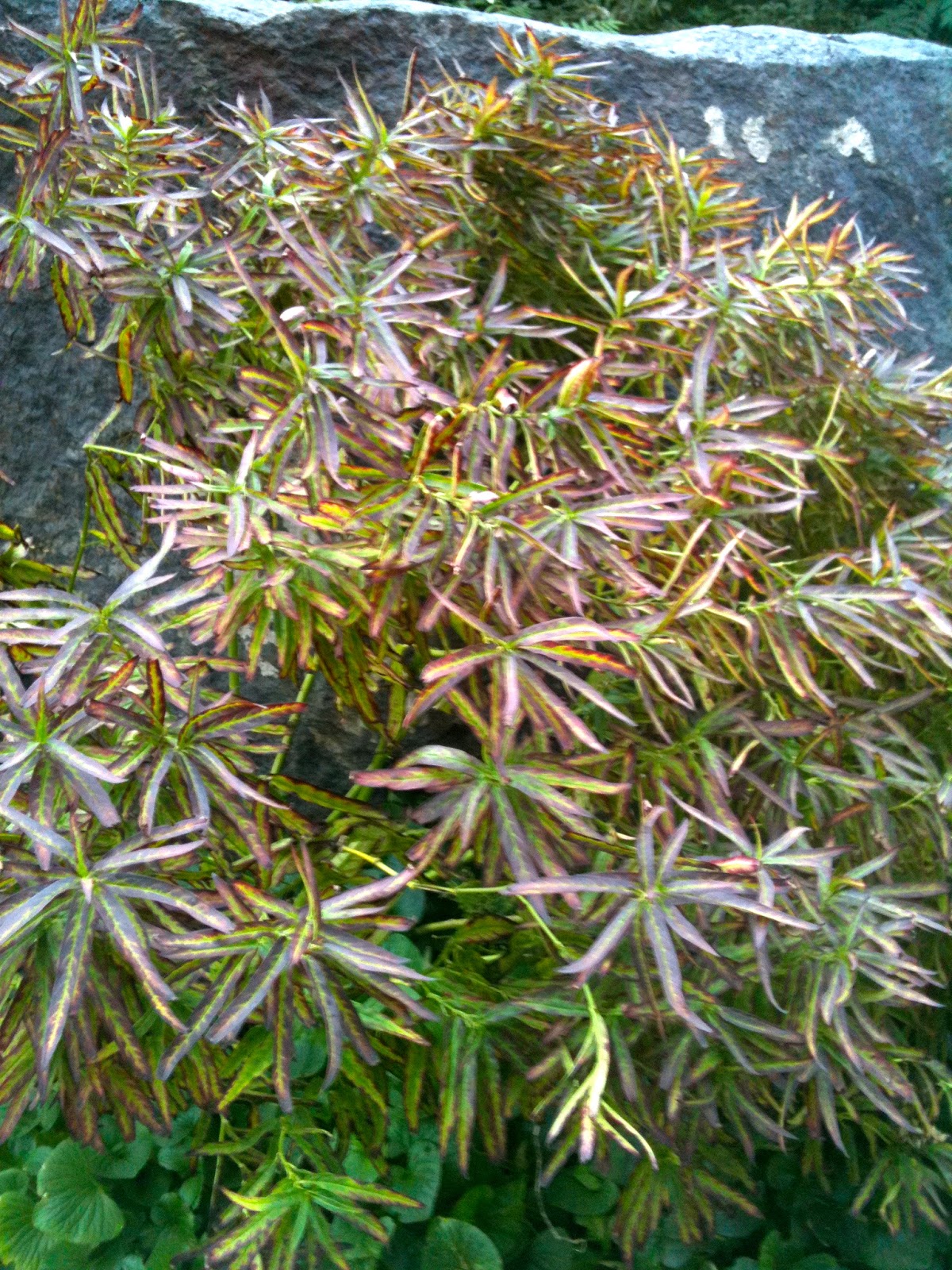
Mystery....Euphorbia?

My students and I encountered this plant at the Museum of the American Indian last week.  Damn, if I'm not stumped on what it is.  Any ideas?


At first glance, I thought it may be an Aslcepias, primarily because it looked like milkweed bugs were on the stem. But after reviewing this old post, I'm pretty sure they aren't milkweed bugs and certain this isn't an Asclepias (though the stem, when broken, did emit a milky glaze). 


The overall habit reminds me of an Euphobia, though I can't confirm a particular species.  The jointed stems also have me a bit stumped. Whataever it is, I love the variable fall color, with orangey green hues along the center, turning deep burgundy at the leaves' edges.

Wednesday, October 5, 2011

Okra

The other day, my DC students and I were suffering the recent cold snap of weather, touring gardens around the mall, in search of some notable fall plants.  We found this at a community garden nearby.  At first glance, the leaves (and most of all the flowers) indicate the plant is in the Malvaceae (hibiscus) family, and luckily one of my students instantly recognized this as okra, or Abelmoschus esculentus.


'

Below, you can look inside the flower and see why it's so clearly a hibiscus type plant -- the sexual parts of the flower are arranged in along a staminal column - a tall sheath encloses the stems of the pistil, which emerge at the top of the column (the velvety black parts below).  Along the column, stamens and anthers extend, perpendicular to the length of the column. 


At the bottom left on both photos you can see the remaining seed pod after flowering is complete.  The pod is the actual okra forming.  Okra is distinctive by its octagonal cross section.  It's common in southern US food as well as in recipes in the middle east and southeast Asia.  Most of the recipes include stir frying or flash cooking the whole pods.  If they are slow cooked, they become a bit slimy, as the skin that breaks down in heat is mucilaginous. Slicing the pods is common in cajun food like gumbo, and in this case, any broken down 'goo' is cooked off in the soupy mix. 


Depending on the cultivars, some okras are hardy in this zone.  Typically however they are annual.